Source Heat Resistant Rat Tail Comb for Salon, Home, Travel
Compare 30 listings of heat resistant rat tail comb options suitable for salon, home, and travel use. Buyers can evaluate specifications, customization, and pricing for plastic styling tools from Chinese manufacturers.
Key considerations
Products List






Comprehensive Sourcing Guide
Strategic Sourcing Guide for Heat Resistant Rat Tail Combs
Understanding Product Specifications and Variants
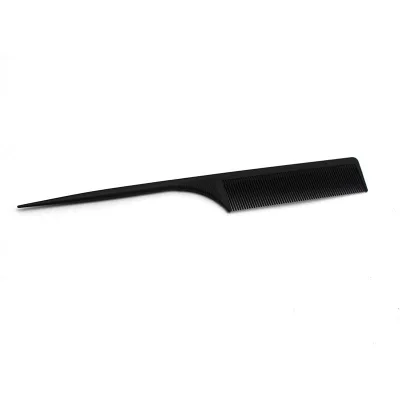
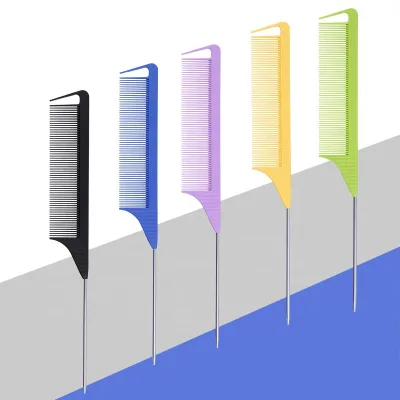
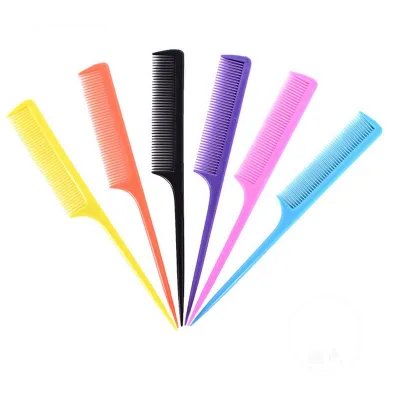
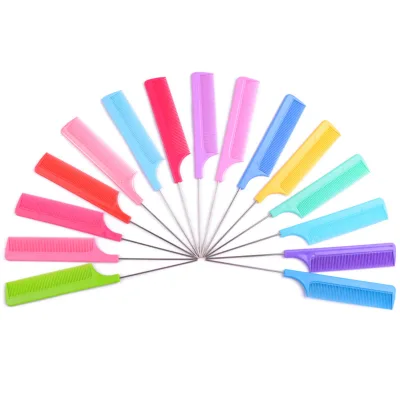
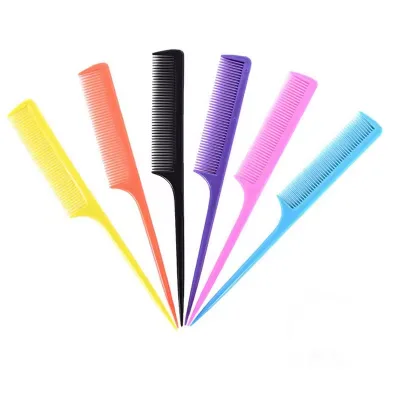
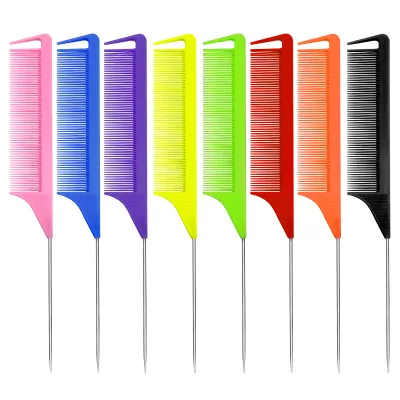
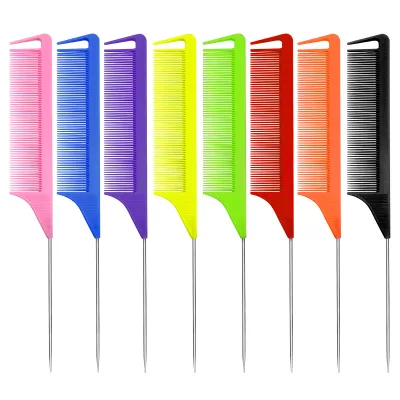
The procurement of heat resistant rat tail combs requires a granular understanding of the diverse specifications available in the global market. These tools are primarily categorized under "Common Comb" or "Hair Comb & Brush" types, designed specifically for professional styling and detailed hair sectioning. The defining characteristic of a rat tail comb is its fine, pointed tail end, which facilitates precise parting and styling, while the "heat resistant" attribute indicates materials capable of withstanding high temperatures from styling tools like flat irons or curling wands without melting or deforming.
Based on observed market data, the physical dimensions of these combs vary significantly depending on the intended application and model. Standard specifications include models with dimensions such as 23.22.7cm, which are typical for general salon use, while others may feature larger profiles like 3528*33cm for specific bulk packaging or extended utility. The material composition is a critical differentiator; while the majority of the observed inventory utilizes plastic as the primary tooth material, some entries indicate wood as a standard, suggesting a niche market for eco-friendly or traditional styling tools. The injection finish is a common manufacturing method, though buyers should verify if other finishes are available to meet specific aesthetic or functional requirements.
The weight of the product is another essential specification for logistics and user experience. Observed data points to weights ranging from approximately 7 grams to 10 grams for individual units, with some bulk packaging metrics indicating a single gross weight of 0.500 kg. This variance impacts shipping costs and the perceived quality of the tool; a heavier comb often implies a denser, more durable plastic formulation, which is desirable for professional environments. Furthermore, the "Folded" attribute is listed as "Unfolded," confirming that these are rigid, single-piece units rather than collapsible travel accessories, although they are explicitly noted as suitable for travel when packed in individual OPP bags.
Technical Attributes and Material Performance
When evaluating the technical performance of heat resistant rat tail combs, the focus must shift from general dimensions to material science and functional durability. The core requirement for these products is their ability to resist heat, a feature explicitly highlighted in product descriptions as "Heat Resistence." This attribute is crucial for stylists who frequently use the comb in conjunction with heated styling devices. The material, predominantly plastic, must be engineered to maintain structural integrity under thermal stress. Buyers should verify the specific polymer type used, as generic plastic may warp at lower temperatures compared to high-grade engineering plastics designed for salon environments.
In addition to heat resistance, the anti-static properties of the comb are a significant technical consideration. Products are often marketed as "Heat Resistant Anti Static Styling Rat Tail Comb," indicating that the material formulation addresses static electricity, which can cause hair to frizz or cling to the comb during styling. This feature is particularly valuable for women's hair care routines where smooth, fly-free results are paramount. The "Biodegradable" attribute observed in some listings suggests an emerging trend toward sustainable materials, offering an alternative to traditional petroleum-based plastics. However, this presents a potential trade-off between environmental impact and thermal durability, requiring careful supplier verification to ensure the biodegradable material still meets the heat resistance standards required for professional use.
The craftsmanship of the comb also plays a vital role in its performance. The "Injection Finish" suggests a molding process that ensures uniform tooth spacing and smooth edges, reducing the risk of snagging or damaging hair. Some listings mention that the finish "Can Be Other Finish," implying customization options for texture or grip. For professional salon use, the comb must also be durable enough to withstand daily, heavy usage. The "Professional Salon Use" feature is a key indicator of quality, distinguishing these combs from low-grade, disposable alternatives. Buyers should look for evidence of robust construction, such as reinforced teeth or a balanced weight distribution, which contributes to the "Professional" classification.
Compliance, Certification, and Safety Standards
Navigating the compliance landscape for hair styling tools involves verifying adherence to international safety and environmental standards. While specific certification data for every listed product is not universally available in the provided context, the mention of "ROHS" as a background factor indicates that compliance with the Restriction of Hazardous Substances directive is a relevant consideration for the market. This directive limits the use of specific hazardous materials in electrical and electronic equipment, and by extension, consumer goods that may interact with heat or electrical styling tools. Buyers should explicitly request ROHS compliance documentation from suppliers to ensure the plastic materials used do not contain restricted levels of lead, mercury, cadmium, or other harmful substances.
Standardization is another critical aspect of compliance. The observed product standards, such as "23.22.7cm" or "19631*3mm," serve as dimensional benchmarks, but they do not inherently guarantee safety. Buyers must verify if the products adhere to specific industry safety standards for hair care tools, which may vary by region. For instance, products originating from China, including those from Guangzhou and Zhejiang, should be evaluated against both local manufacturing standards and the import regulations of the destination country. The "Export Carton" packaging suggests that these products are intended for international trade, necessitating compliance with packaging and labeling regulations in the target market.
Environmental compliance is increasingly important in the procurement of hair tools. The "Biodegradable" and "Hand-Made" attributes observed in some listings point to a growing demand for sustainable products. However, claims of biodegradability must be substantiated with third-party testing or certification to avoid greenwashing. Buyers should inquire about the specific biodegradation conditions (e.g., industrial composting vs. home composting) and the timeline for decomposition. Additionally, the "Customization" and "Logo" options available for these products require that any printed inks or adhesives used for branding also comply with relevant safety and environmental regulations.
Cost Drivers and Pricing Dynamics
The pricing of heat resistant rat tail combs is influenced by a complex interplay of material costs, manufacturing complexity, and order volume. The observed price range of 0.02 to 2.5 USD per unit reflects the vast spectrum of quality and customization available in the market. At the lower end of this range, products are likely standard, mass-produced plastic combs with minimal customization and basic heat resistance features. These are often targeted at budget-conscious retailers or promotional campaigns. Conversely, the higher price points, approaching 2.5 USD, likely correspond to combs with advanced material formulations, superior heat resistance, anti-static properties, and custom branding or packaging.
Minimum Order Quantity (MOQ) is a significant factor in determining the effective cost per unit. The observed MOQ range of 50 to 10,000 units allows buyers to tailor their orders to their specific needs. Smaller MOQs of 50 units are ideal for startups or businesses testing new product lines, allowing for lower upfront capital expenditure. However, larger orders of 10,000 units typically unlock significant economies of scale, reducing the per-unit cost and shipping expenses. Buyers should negotiate based on their volume, understanding that higher volumes often justify requests for customizations such as OEM colors, logos, or specialized packaging.
Customization is another major cost driver. The availability of "Can Custom" logos and "OEM" colors adds value but also increases production costs. The "One PC Per Transparent OPP Bag" or "Carton" packaging options also influence the final price. Bulk packaging, such as "600PCS/CTN," is more cost-effective for large orders, while individual retail packaging increases the unit cost but enhances the product's marketability. Buyers must balance the desire for premium packaging and branding against the budget constraints, ensuring that the added cost aligns with the perceived value in their target market.
Typical Applications and Market Segmentation
Heat resistant rat tail combs serve a diverse range of applications, catering to various market segments from professional salons to home users. The primary application is in professional salon environments, where the comb's precision and heat resistance are essential for high-quality styling. The "Professional Salon Use" feature highlights its suitability for stylists who require reliable tools for daily use. In these settings, the comb is used for sectioning hair, creating precise partings, and applying heat styling tools without damaging the comb or the hair.
For home users, the comb offers a versatile solution for personal grooming. The "Suitable for: Travel,Home,Hotel" attributes indicate that these combs are designed for portability and convenience. The "Unfolded" nature of the comb ensures it remains functional and ready for use, while the compact size makes it easy to pack in travel bags. The "Age Group: All Ages" and "Gender: Unisex" specifications further broaden the market appeal, making these combs suitable for a wide demographic. The "Disposable: Non-Disposable" attribute confirms that these are durable tools intended for long-term use, providing value to consumers who prefer reusable items over single-use alternatives.
The "Lice Comb" and "Long handled comb" classifications suggest specialized applications as well. While the primary focus is on styling, the fine teeth of a rat tail comb can also be effective for lice detection and removal, adding a functional dimension to the product. The "Laser" attribute, though less common, may refer to a specific design feature or branding, potentially indicating a high-tech or specialized version of the comb. Understanding these varied applications allows buyers to target specific customer segments, whether they are professional salons seeking high-performance tools or retailers looking for versatile home care products.
Supplier Evaluation and Quality Control Protocols
Selecting the right supplier for heat resistant rat tail combs requires a rigorous evaluation process focused on reliability, quality, and capacity. The "prod_origin" data indicates that the majority of suppliers are located in China, with specific hubs in Guangzhou and Zhejiang. These regions are known for their manufacturing capabilities in plastic goods, but buyers must verify the specific factory's reputation and quality control measures. The "Customization: Available" and "Logo: Can Custom" options suggest that suppliers are flexible, but buyers should assess their ability to maintain consistency across large orders.
Quality control is paramount to ensure that the combs meet the specified heat resistance and durability standards. Buyers should implement a multi-stage QC process, starting with pre-production samples to verify material quality and design accuracy. During production, random sampling should be conducted to check for defects such as uneven teeth, rough edges, or color inconsistencies. Post-production inspection should focus on packaging integrity and labeling accuracy. The "Feature: Heat Resistence, Professional Salon Use" claims must be validated through actual testing, such as exposing the comb to high temperatures to ensure it does not warp or melt.
Supplier communication and transparency are also critical factors. Buyers should request detailed product specifications, including material composition, dimensions, and weight, to ensure alignment with their requirements. The "Single package size" and "Single gross weight" data provided by suppliers should be cross-referenced with actual measurements to avoid discrepancies in shipping costs. Additionally, buyers should verify the supplier's ability to meet lead times and handle order fluctuations, especially given the wide MOQ range observed. Establishing a long-term partnership with a reliable supplier can mitigate risks and ensure a steady supply of high-quality combs.
Long-Term Procurement Considerations and Sustainability
Sourcing heat resistant rat tail combs with a long-term perspective involves considering sustainability, supply chain resilience, and market trends. The "Biodegradable" and "Hand-Made" attributes observed in some listings indicate a shift towards more sustainable manufacturing practices. Buyers should prioritize suppliers who demonstrate a commitment to environmental responsibility, such as using eco-friendly materials and minimizing waste. This not only aligns with growing consumer demand for sustainable products but also future-proofs the supply chain against potential regulatory changes.
Supply chain resilience is another critical consideration. The reliance on suppliers in China, particularly in Guangzhou and Zhejiang, requires buyers to have contingency plans in place for potential disruptions, such as geopolitical tensions or logistical challenges. Diversifying the supplier base or maintaining safety stock can help mitigate these risks. Additionally, buyers should monitor market trends to anticipate changes in demand for specific features, such as anti-static properties or custom branding.
Finally, the long-term viability of the product depends on its ability to adapt to evolving consumer needs. The "Customization" and "OEM" options provide flexibility for buyers to respond to market shifts, such as introducing new colors or designs. By maintaining a close relationship with suppliers and staying informed about industry developments, buyers can ensure a steady supply of high-quality, heat resistant rat tail combs that meet the needs of their customers while adhering to sustainability and quality standards.
FAQs
What materials are used for heat resistant rat tail combs?
Most combs use plastic as the primary tooth material, though some entries indicate wood as a standard. The plastic formulation must be engineered to withstand high temperatures from styling tools without melting or deforming during professional use.
Can buyers customize the logo and color of these combs?
Yes, customization is available for both logos and colors, with options for black or OEM shades. Buyers can request specific branding on the product, but they must verify that any printed inks comply with safety and environmental regulations.
Which specifications define the standard size of these combs?
Standard dimensions vary by model, with common sizes including 23.2 by 2.7 cm for general use. Other specifications list larger profiles like 35 by 28 by 33 cm for bulk packaging, while individual unit weights range from 7 to 10 grams.
How are these combs typically packaged for shipping?
Packaging options include one piece per transparent OPP bag or bulk export cartons containing 600 pieces. Some listings specify carton packaging, while others offer OEM packing solutions to meet specific retailer requirements for retail presentation.
What is the minimum order quantity for sourcing these combs?
The observed minimum order quantity ranges from 50 to 10,000 units depending on the supplier and customization level. Lower MOQs suit startups testing new lines, while larger orders unlock economies of scale for per-unit cost reduction.
Where are these heat resistant combs primarily manufactured?
Products originate from China, with specific manufacturing hubs identified in Guangzhou and Zhejiang provinces. Buyers should verify that products intended for export comply with both local manufacturing standards and the import regulations of their destination country.
Are these combs suitable for professional salon use?
Yes, many listings explicitly state suitability for professional salon use due to their heat resistance and durability. These tools are designed for daily heavy usage, featuring injection finishes that ensure uniform tooth spacing and reduce the risk of snagging hair.